Wondering if your roof and siding can handle another Albertville winter? With long stretches of snow and deep freezes, exteriors take a beating here. You want upgrades that prevent ice dams, lower energy waste, and stand up to heavy, wet snow. This guide shows you what works locally, what codes require, typical costs, the best timing, and where to look for incentives. Let’s dive in.
Albertville winter realities
Albertville winters are cold, snowy, and full of freeze–thaw cycles that stress roofs and siding. January averages hover near a 19°F high and 7°F low, and snow can arrive as early as October and linger into May, which raises ice-dam risk and wears on flashings and claddings. Local climate data confirms these patterns.
Albertville enforces Minnesota State Building Codes and requires permits for reroofing and residing, with inspections along the way. Before you hire, confirm permit steps with the City of Albertville Building Department. Minnesota’s design ground-snow load is typically 50 lb/ft² in Wright County, which matters if you consider heavier roofing like tile or slate. Check the state rule for context at the Minnesota Administrative Rules.
For ice control, an ice barrier is required at eaves. Code calls for a self-adhered membrane that extends at least 24 inches inside the exterior wall line at the eaves and full coverage in valleys, with more coverage on complex roofs as needed. See a representative eave detail from a leading manufacturer in this technical guide.
Roofing upgrades that work
Architectural asphalt shingles
Asphalt shingles are common, cost-effective, and familiar to buyers. They can last 20 to 30 years or more depending on product and weather. In cold conditions, installers may pre-warm materials and hand-seal courses so adhesive strips bond properly and shingles are not brittle during handling.
Metal roofing
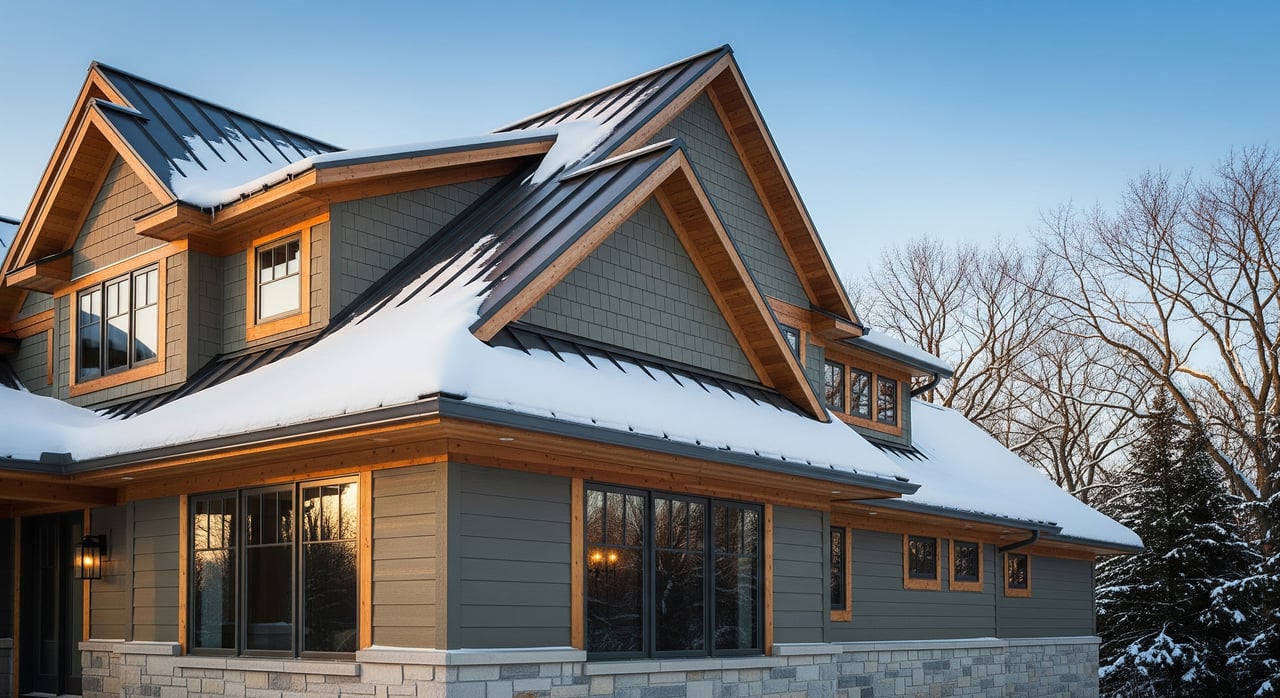
Metal sheds snow readily, which helps reduce standing snow and ice build-up. It is durable, light, and can last decades with proper detailing. Plan for snow retention where snow slides off, and expect a higher upfront cost than standard shingles.
Premium materials
Cedar, slate, and tile deliver distinctive looks, and slate can be very long-lasting. Some options are heavy, which can trigger a structural review under Minnesota’s snow-load criteria. Maintenance and cost often make them less practical for winter performance alone.
Critical waterproofing details
Layering is your friend in Albertville. Use self-adhered ice and water protection at eaves and valleys, then a quality underlayment upslope. Flash every intersection carefully at chimneys, dormers, walls, and penetrations. A high-quality membrane that seals around fasteners can help if wind-driven snow works under shingles. See an example manufacturer approach to eave protection here.
Insulation and ventilation stop ice dams
Ice dams start with heat loss from the house. The highest-impact fix is attic air sealing and continuous insulation, paired with balanced soffit-to-ridge ventilation to keep the roof deck cold. Learn how air sealing, insulation, and ventilation work together in cold climates from the Building America Solution Center’s guidance on ice-dam prevention.
Best timing in Minnesota
Late spring through early fall offers the smoothest installs. Roofing in cold months is possible with manufacturer-approved procedures like storing materials warm and hand-sealing shingle courses as needed. GAF outlines practical cold-weather tips for installers in this guide.
Typical roof costs
Regional estimates show asphalt shingle replacement commonly in the range of about $5 to $15 per sq ft, while metal can run $6 to $25+ per sq ft, depending on type and complexity. Many full reroofs land roughly in the $12,000 to $30,000+ range. See a Minnesota-focused cost overview at HomeBlue’s guide. Always get local quotes for your home and scope.
Siding options for deep cold
Fiber-cement siding
Fiber-cement is engineered for freeze–thaw durability and moisture resistance, which suits our climate. James Hardie’s HardieZone system aligns products to regional weather, including cold-climate needs. Explore the climate-specific approach in the HardieZone overview.
Vinyl and insulated vinyl siding
Vinyl is budget-friendly and low maintenance. In extreme cold it can become more brittle and it expands and contracts with temperature, so correct nailing and gaps are important. Insulated vinyl adds continuous R-value and stiffness, which can improve looks and energy performance at a moderate price step-up.
Engineered wood and cedar
Engineered wood offers appealing styles and is lighter than fiber-cement. Natural wood like cedar has character and some innate insulating value, yet it needs diligent detailing and maintenance to manage moisture in freeze–thaw cycles.
Add exterior insulation during re-siding
Re-siding is the best time to add continuous exterior insulation to reduce thermal bridging and boost comfort. In cold climates, guidance often targets meaningful exterior R-value additions during re-siding to move walls toward recommended totals.
Incentives, insurance, and resale
Albertville is served by Xcel Energy and CenterPoint Energy. Regional programs often provide rebates for air sealing and insulation, with amounts and eligibility that change over time. A good starting point for current offerings and contractor eligibility is the Center for Energy and Environment’s program summary. Federal tax credits for insulation and air sealing, plus Minnesota’s Strengthen Minnesota Homes program for resilient roofs, may also apply. Confirm rules, contractor requirements, and documentation before you start.
Exterior replacements tend to help at resale. National cost-versus-value analyses frequently show strong recoup for fiber-cement siding, roofing, and other exterior upgrades. See recent trends in the Cost vs. Value overview. Actual ROI varies by product, market timing, and condition.
Quick homeowner checklist
- Confirm permits and inspections for re-roof or re-side, and who will pull the permit.
- Ask for a written scope that specifies underlayment type, ice and water shield locations, flashing details, ventilation approach, and disposal.
- Prioritize attic air sealing and insulation alongside any roofing work to reduce ice-dam risk.
- If choosing heavier roofing, request a structural check against Minnesota’s 50 lb/ft² ground-snow load.
- Discuss cold-weather procedures if installing late fall or winter, including material warming and hand-sealing.
- During re-siding, plan for continuous exterior insulation to cut thermal bridging.
- Check utility rebates and potential tax credits early so work meets program specs and documentation.
- Schedule early for spring through fall; contractor calendars fill quickly.
Ready to match your exterior upgrades to your goals, timing, and budget? For neighborhood-level guidance and a data-informed plan that supports your move, reach out to Luke DeLacey.
FAQs
Ice dams in Albertville: will a new roof stop them?
- A new roof helps limit leaks, but long-term ice-dam control depends on attic air sealing, sufficient insulation, and balanced ventilation to keep the roof deck cold.
Metal roof vs. shingles for Minnesota snow: which is better?
- Metal sheds snow more easily and is very durable, while asphalt shingles are more affordable and widely used; both perform well when detailed correctly for ice and water.
Can you replace siding in winter in Albertville?
- Yes, but vinyl and PVC trim can be brittle in freezing weather, so installs often take extra care; many crews prefer milder months for best results.
Do attic insulation upgrades qualify for rebates locally?
- Often yes; programs through utilities serving Albertville may offer incentives when work meets specs and uses eligible contractors, so confirm current rules before you start.
How much should I budget for a new roof in Minnesota?
- Many full replacements fall roughly between $12,000 and $30,000+ depending on size, material, and complexity; always get local quotes tied to your home and scope.